
1.0 Is England becoming the new wine destination?
What a summer in Bordeaux taught me about the future of wine.
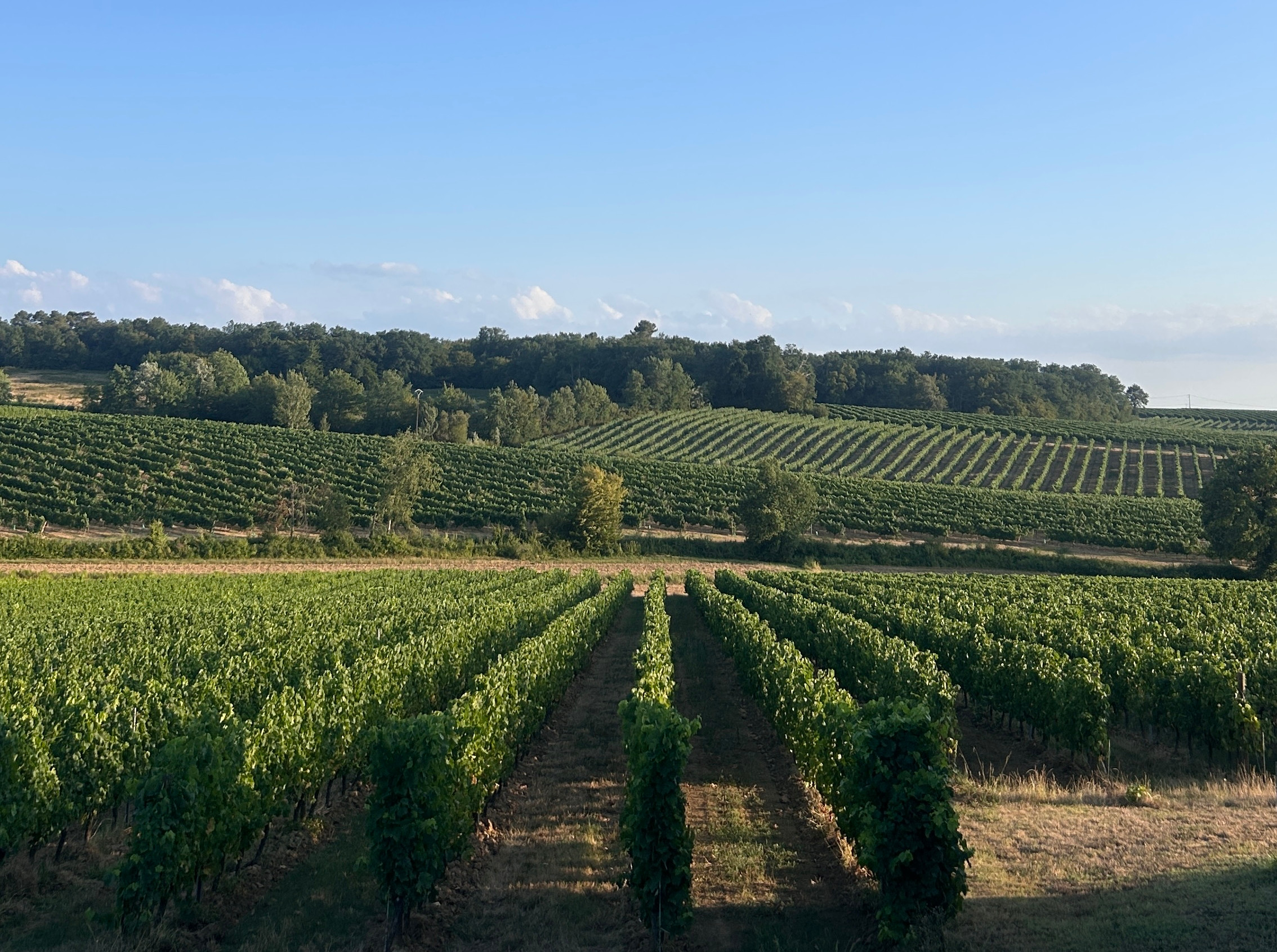
I've spent a fair amount of time in Bordeaux this summer.
Drinking the wine, obviously. But also talking to the people who grow it, walking through vineyards and hearing first-hand about what's changing. And then came the fires.
Watching parts of south-west France burn this summer, alongside devastating fires across Spain and other parts of Europe, has been incredibly difficult to see. Especially having just been there and knowing the landscapes, vineyards and people behind some of those places.
It also got me thinking about something that came up again and again while I was in Bordeaux.
The weather. Not in the very British “looks like rain” sense.
The climate is changing what it means to grow wine in some of the world's most established regions, and it's happening much faster than I realised.
Bordeaux is getting hot. Really hot.
Wine has always changed from year to year. That's the whole point of a vintage.
A hot year tastes different from a cool one. A wet year behaves differently from a dry one. But growers in Bordeaux are now dealing with something bigger than normal vintage variation. Harvests have been moving earlier. Grapes are ripening faster. Sugar levels can climb before all of the flavours have had time to fully develop. Extreme heat can leave grapes exposed to sunburn, while prolonged heat and drought put the vines themselves under enormous stress. Then there's fire.
The impact of this summer's fires on the 2026 Bordeaux vintage won't be fully understood until later. Smoke exposure can create problems in grapes and potentially affect the finished wine, but it doesn't automatically mean an entire region's vintage is ruined. What it does do is add another concern to an already complicated list.
And if your entire business depends on a plant growing outside for nine months of the year, there isn't exactly a Plan B where you move everything indoors. So growers are adapting.
Turns out, protecting old wine can mean doing some pretty new things.
This was probably one of my biggest takeaways from Bordeaux.
When you think about an old château, you imagine tradition. The same vineyards. The same families. The same methods being passed down through generations.
In reality, some of the most traditional wine regions in the world are changing how they work at quite a pace. More biodiversity, cover crops growing between vines, hedgerows are being planted and there is a lot more thought around soil health and water retention.
Different approaches to canopy management so grapes have more protection from extreme sun. Even different grape varieties are being explored in Bordeaux because some cope better with heat and drought. Which I find pretty cool. Not because tradition is disappearing. Almost the opposite. They're changing things because they want to protect what was there in the first place.
Wine has always adapted. It just feels like it now needs to adapt a lot faster.
Then I started looking north...
While some of Europe's traditional wine regions are dealing with too much heat, places that historically struggled to get enough of it are finding themselves in a very different position.
Hello, England.
English wine isn't exactly new. The Romans were growing vines here nearly 2,000 years ago. Vineyards existed throughout medieval England and there were still vines being grown during Henry VIII's reign but over time, with cooler conditions, it became easier to import European wines instead. For a long time we simply weren't a particularly reliable place to ripen wine grapes.
But that's changing.
Warmer growing seasons mean grapes can ripen more consistently across southern England, rather conveniently, Chardonnay, Pinot Noir and Pinot Meunier (the three grapes most associated with Champagne) happen to work really well here.
Suddenly the English climate that made wine growing difficult for centuries is becoming an advantage.
Back in 2015, Champagne Taittinger partnered with Hatch Mansfield and investors to buy land in Kent. At the time, that was big news. Eleven years later, the purchase itself isn't particularly new. What's interesting is that we're now getting to see the result. Over the last 10 years they've grown, made, and aged the wine and now in 2025 the first bottles finally reached the market. That's the thing about wine. There is absolutely no instant gratification. We're drinking a decision somebody made a decade ago.
Pierre-Emmanuel Taittinger has previously compared Kent's conditions with those Champagne experienced decades earlier, and Taittinger wasn't the only international producer paying attention. Vranken-Pommery established Louis Pommery England in Hampshire. California's Jackson Family Wines has invested in Essex, with its eyes not only on sparkling wine but still Chardonnay and Pinot Noir.
When businesses with generations of wine knowledge start placing those kinds of bets, I think it's worth taking notice.
But let's give the English producers their dues, because none of this started when the French arrived. English producers had already been doing the hard work.
Chapel Down, Gusbourne, Nyetimber, Ridgeview and others have spent years changing the perception of English sparkling wine and I think that perception is finally catching up.
English sparkling isn't the novelty bottle anymore. You see it in great restaurants. You see it at events. You see people actively choosing it rather than choosing it because someone has told them they ought to support British wine, but importantly, the industry is growing. It's becoming proper business.
Essex though?! This one was an interesting find, whilst in. my rabbit hole.
Kent and Sussex make sense to me. Vineyards, rolling countryside, weekend away. However, Essex wasn't immediately on my wine bingo card, however, Crouch Valley keeps coming up. It's one of the driest parts of the country, gets plenty of sunshine and is becoming particularly interesting for Pinot Noir and Chardonnay. The fact that Jackson Family Wines, one of California's major wine businesses has chosen to invest there makes it even more interesting.
Could Essex become known for genuinely great still Pinot Noir? Honestly, who knows, but I love that we're even asking the question.
This then led me to start thinking, are we becoming a proper wine country? I think we probably are and perhaps that's the part of this whole story I find most exciting. Not that England is going to replace Champagne. It won't. Bordeaux isn't suddenly going anywhere either. These places have centuries of history, culture and expertise behind them. But the wine map doesn't have to be fixed forever. Climate is changing. Growers are changing. Where grapes can thrive is changing, and, perhaps most importantly, the way we drink wine is changing too.
People don't necessarily care about all the old rules in the same way. They want to visit vineyards. Meet the people making the bottle they're drinking. Have lunch there. Stay nearby. Understand the story without needing a wine qualification first. That makes me wonder what the south of England looks like ten years from now. Could a weekend in Kent become as normal as planning a vineyard weekend in France? Could Sussex become an international wine destination? Could Essex become the place everyone suddenly wants Pinot Noir from? Could we see even more major international producers planting here? I wouldn't bet against it. Because one of the stranger consequences of an incredibly serious shift in our climate is that England has found itself in a pretty extraordinary position. We're not suddenly learning how to make wine. We've been doing that for centuries. The conditions are simply allowing us to do much more with it, and considering I've spent most of my wine life looking across the Channel towards France... I quite like the idea that people might start looking back this way too.
If all of this has made you think, fine, maybe I should actually try some English wine, Chapel Down feels like a very good place to start. Based in Kent, they're one of the producers that helped put English sparkling wine on the map and have been making the case for English wine long before it became the cool thing to talk about. Go for a vineyard tour, stay for lunch and, obviously, try the wine. Consider it research.



Comments