
6.0 Wine Doesn't Need Another Wine Tasting...
I should probably start this by saying that I love a wine tasting. I have my wine qualifications, I host them myself and I will happily spend an evening talking about what is in my glass, so this isn't me suggesting we all pack away the tasting notes and call it a day, however, I want to question how we get more people interested in wine, particularly those who would never consider themselves "wine people", and I'm not convinced that inviting them to another wine tasting is always the answer.
Some of that has come from the events I've been working on myself. I always find myself putting wine alongside something else rather than making it the entire event. Sometimes there is movement involved, sometimes people are simply looking for an opportunity to meet others, sometimes it's an excuse to go on holiday. Once I started thinking about it, I began noticing more brands doing something similar. They aren't necessarily creating wine events, they're building places people want to go, borrowing from food, fashion, travel, sport and entertainment, then finding a natural place for wine within them.
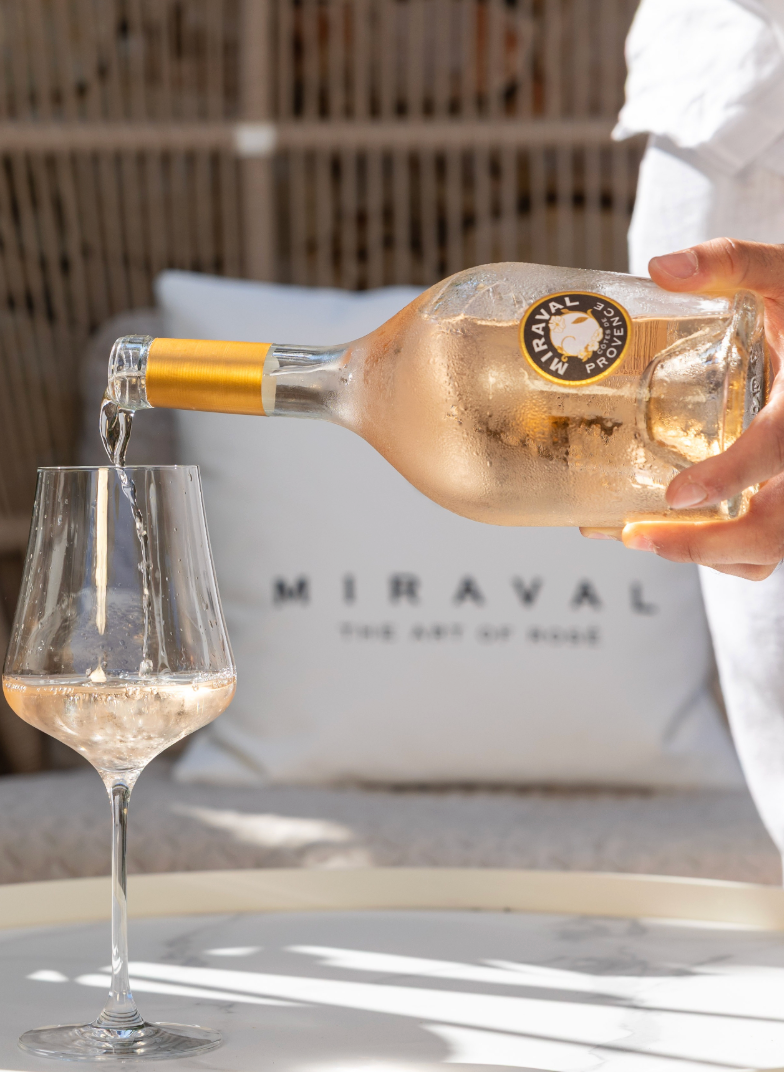
Miraval took Provence to Portugal. Maybe it's because my husband and I love
Portugal, not sure, however I saw (and loved by the way) The Champagne Lounge by Miraval at VILA VITA Parc in the Algarve, which opened for the summer and runs until 26 September.
Rather than creating a conventional tasting room, Miraval has essentially transported its world to Portugal.

The temporary outdoor lounge is set within the resort's Clubhouse and opens from late afternoon, with Miraval wines and Fleur de Miraval Champagne at the centre of it. It's a Portuguese exclusive and only the second Miraval Champagne Lounge of its kind in Europe. (VILA VITA Parc)
The setting does a lot of the storytelling before anybody needs to tell you about the wine. You're outside in the Algarve in the late-afternoon light, with somewhere comfortable to settle in and a cold glass in front of you.
It communicates Provence through atmosphere rather than through a lesson about Provence. You don't need to arrive knowing what Fleur de Miraval is, or even particularly caring about Champagne. You can want to be there because the place itself looks beautiful, and your relationship with the wine develops as part of the experience.
There is quite a big difference between inviting somebody to taste Miraval and inviting them to spend an afternoon in the world of Miraval.

A great one this summer in London was KFC opening a wine bar, because apparently Chicken Wine needed chicken, Duh!
Over August Bank Holiday, KFC and Famille Perrin's La Vieille Ferme opened Coq au Vin, a temporary wine bar at Kachette Annex in Shoreditch. If you've spent enough time online, you may already know where this is going. La Vieille Ferme has become affectionately known as "Chicken Wine" because of the chicken on its label, particularly among younger drinkers. KFC and its PR agency, Here Be Dragons spotted the cultural overlap and decided to make the internet joke physical. So they built an actual Chicken Wine bar.

The production agency Niche Experience, which had previously created KFC's Colonel's Arms pub, was brought in to develop the space.
They went surprisingly deep on the wine. Before the event, the teams held a chicken-and-wine tasting to work out which La Vieille Ferme wines actually worked with different KFC dishes.
So while the idea was knowingly silly, the wine wasn't an afterthought. People could discover that sparkling rosé works with Popcorn Chicken without sitting down to a masterclass on food pairing. Someone who might never book themselves onto a traditional wine evening suddenly had a reason to try several different wines because they wanted to experience the ridiculous KFC wine bar they'd seen online. It sold out in less than a week and generated 221 pieces of coverage, including 113 pieces of social coverage, according to Here Be Dragons.
The internet had already created the behaviour, the brands simply gave people somewhere physical to experience it.

Another one I saw and love this month was, Moët & Chandon. From 9th 30th September, CLOCKWORK at the Fairmont Royal York has become a Moët & Chandon Champagne Lounge, timed around the Toronto International Film Festival and the wider film season happening across the city.
The creative around it isn't really about attending a tasting. The hotel talks about pre-premiere drinks, post-screening celebrations and evenings out, with
Champagne and food available throughout the night.
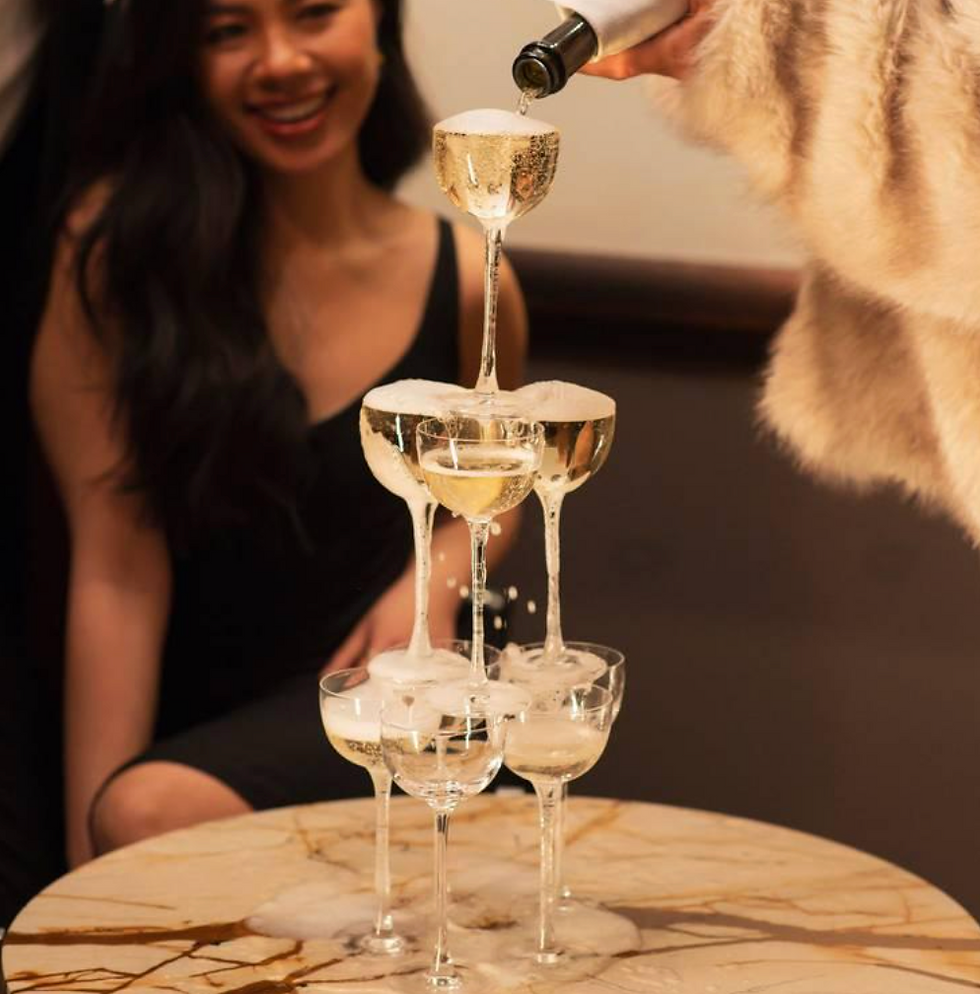
At 5:30pm there is a ceremonial Moët Champagne-tower pour accompanied by live music. The wider hotel environment was transformed too, including a large gold cinematic installation by Frank Rea in the lobby, featuring Toronto's skyline wrapped in a film reel alongside a vintage camera, stars and candlelight.
The opening of the Champagne Lounge brought together media and film-industry guests over seafood towers, caviar, lobster and Champagne.
There are plenty of individual elements there, but I particularly like the simplicity of the 5:30pm Champagne tower because they've created a ritual rather than another branded photo opportunity. You could be staying in the hotel, heading to a premiere or just meeting someone for a drink, but at the same time each evening something happens that gives people a reason to gather around the bar.
Moët hasn't invented Champagne before the cinema, but it has given the occasion a physical home and a recognisable moment.
Moët is also meeting people at the airport with a cool activation at Madrid Airport, Moët Hennessy Travel Retail and Avolta have created the first Moët & Chandon x Formula 1 travel-retail experience, running through the end of September.

Rather than relying on bottles sitting on a duty-free shelf, space has been created around participation. Travellers can step onto a replica Formula 1 podium, explore pieces connected with the brand's relationship with the sport and visit an interactive Champagne tasting bar.

There are F1-inspired brand ambassadors and merchandise built into the experience too, turning what could have been a fairly conventional airport retail display into something people can physically enter.
Instead of going to the people, they have used this location where people already are, they may not have reached the track, or they may not even have reached your hotel/flight, but they caught those travelling into or out of Madrid, and Moët has found a point within that journey where its F1 partnership makes complete sense.
It is wine finding people within something they're already d
oing rather than waiting for them to seek wine out.
Lastly, Louis Roederer has done something a bit more fashion forward in New York, but the location makes it worth including.

From June until the end of October, Printemps New York at One Wall Street has handed its Champagne Bar over to Louis Roederer.
Collection 246, Blanc de Blancs 2019, Rosé 2017 and Cristal 2016 are available by the glass, meaning someone can experience a fairly serious Champagne portfolio without entering a specialist wine shop, booking a masterclass or travelling to Reims.
Printemps describes itself as a place where fashion, art, gastronomy and culture come together, and its wider programming has included fashion, beauty, travel and design alongside the Roederer Champagne Bar. Someone can discover Cristal because they've gone shopping, a nice new doorway into wine.
What I want to pull out here is that the common thread isn't actually wine.
When I put all of these examples next to one another, I'm not sure the trend is really about pop-ups at all. It's about creating an occasion that people genuinely want to be part of, then working out where the wine belongs within it.

Miraval has created somewhere to spend a late afternoon on holiday whilst KFC and La Vieille Ferme created something funny enough that people wanted to experience it in real life. Moët has placed itself inside film season in Toronto and the F1 travel experience in Madrid, while Roederer has put Champagne inside a luxury

fashion destination. None of those ideas require somebody to identify as a wine lover before walking through the door.
I've spent my career in creative production, building experiences for brands and thinking about everything that goes into making people want to show up in the first place. The idea might start on a page, but then you have to think about the space, what someone sees when they arrive, how they move through it, what they're doing while they're there and, importantly, what they're going to remember afterwards.

Since getting my wine qualifications, I've found myself paying much more attention to how wine brands approach physical experiences. I'm interested in the bottle, obviously, but I'm equally interested in what has been built around it and why somebody who knows absolutely nothing about wine would still want to walk through the door.
The Miraval lounge works because the environment tells you something about the wine before anybody has explained it to you. Coq au Vin works because the creative idea is instantly understandable, but there is enough substance underneath the joke to make the experience worthwhile. Moët's Champagne tower creates a moment for a room to gather around, while its Madrid activation puts the brand somewhere that makes sense within the journey people are already taking.
Those details are production decisions as much as they are marketing decisions.
I don't think making wine more experiential means making it less serious either. The KFC collaboration could easily have stopped at putting a bottle with a chicken on the label next to a bucket of chicken, but the teams actually tasted the wines against the food and developed the pairings properly. Miraval hasn't lost its provenance because you're drinking it in a beautiful lounge in Portugal, and Cristal doesn't suddenly become less interesting because you've discovered it while shopping at Printemps.
The industry has always been very good at creating experiences for people who are already interested enough to book a vineyard tour, attend a masterclass or spend an evening at a tasting. I love all of those things, but there is a much bigger audience outside that world who may never describe themselves as wine people and still really enjoy drinking it.
That's why I love what I do in creative production and with wine. They start to overlap in a really interesting way. Instead of beginning with how do we teach people about this bottle?, you can begin with what would make someone want to be here?
Build something worth showing up for, put a brilliant glass of wine in their hand while they're there, and you might just give them a completely different way into wine.


Comments